
Buying books online has made reading more convenient than ever. Instead of visiting several bookstores, you can browse thousands of titles from your phone or computer, compare different editions, read reviews, and order a book from home.
However, having so many choices can sometimes make it difficult to decide which book is right for you. Whether you are looking for a novel, textbook, cookbook, self-improvement book, business guide, or children’s book, a few simple steps can help you make a better choice.
1. 🎯 Start With Your Purpose
Before searching for a book, ask yourself why you want to read it.
Are you looking for:
- 📖 A novel for entertainment?
- 🎓 A textbook for study?
- 💼 A business or career book?
- 🧠 A personal development book?
- 🍳 A cookbook?
- 🌍 A travel guide?
- 🔬 A science or educational book?
Knowing your purpose immediately makes your search easier.

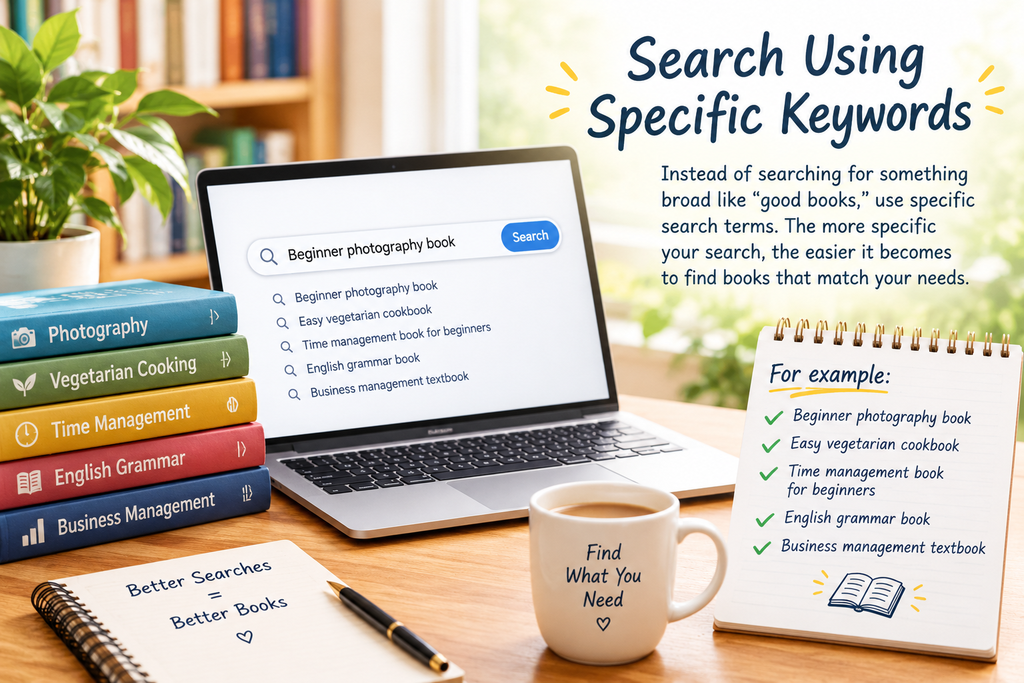
2. 🔎 Search Using Specific Keywords
Instead of searching for something broad like “good books,” use specific search terms.
For example:
- “Beginner photography book”
- “Easy vegetarian cookbook”
- “Time management book for beginners”
- “English grammar book”
- “Business management textbook”
The more specific your search, the easier it becomes to find books that match your needs.
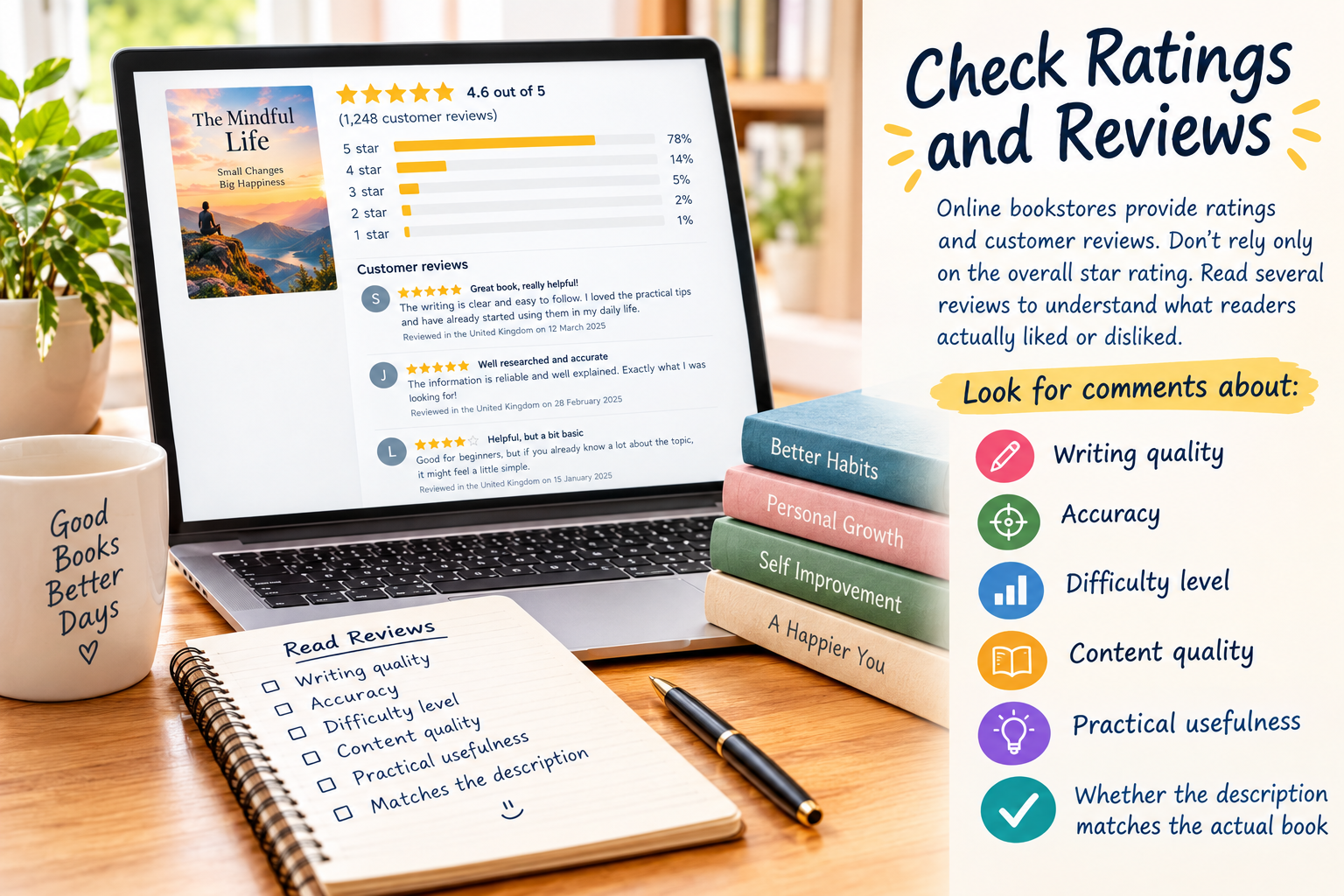
3. ⭐ Check Ratings and Reviews
Online bookstores usually provide ratings and customer reviews.
Don’t rely only on the overall star rating. Read several reviews to understand what readers actually liked or disliked.
Look for comments about:
- Writing quality
- Accuracy
- Difficulty level
- Content quality
- Practical usefulness
- Whether the description matches the actual book
Remember that different readers have different expectations, so consider several opinions rather than one review.
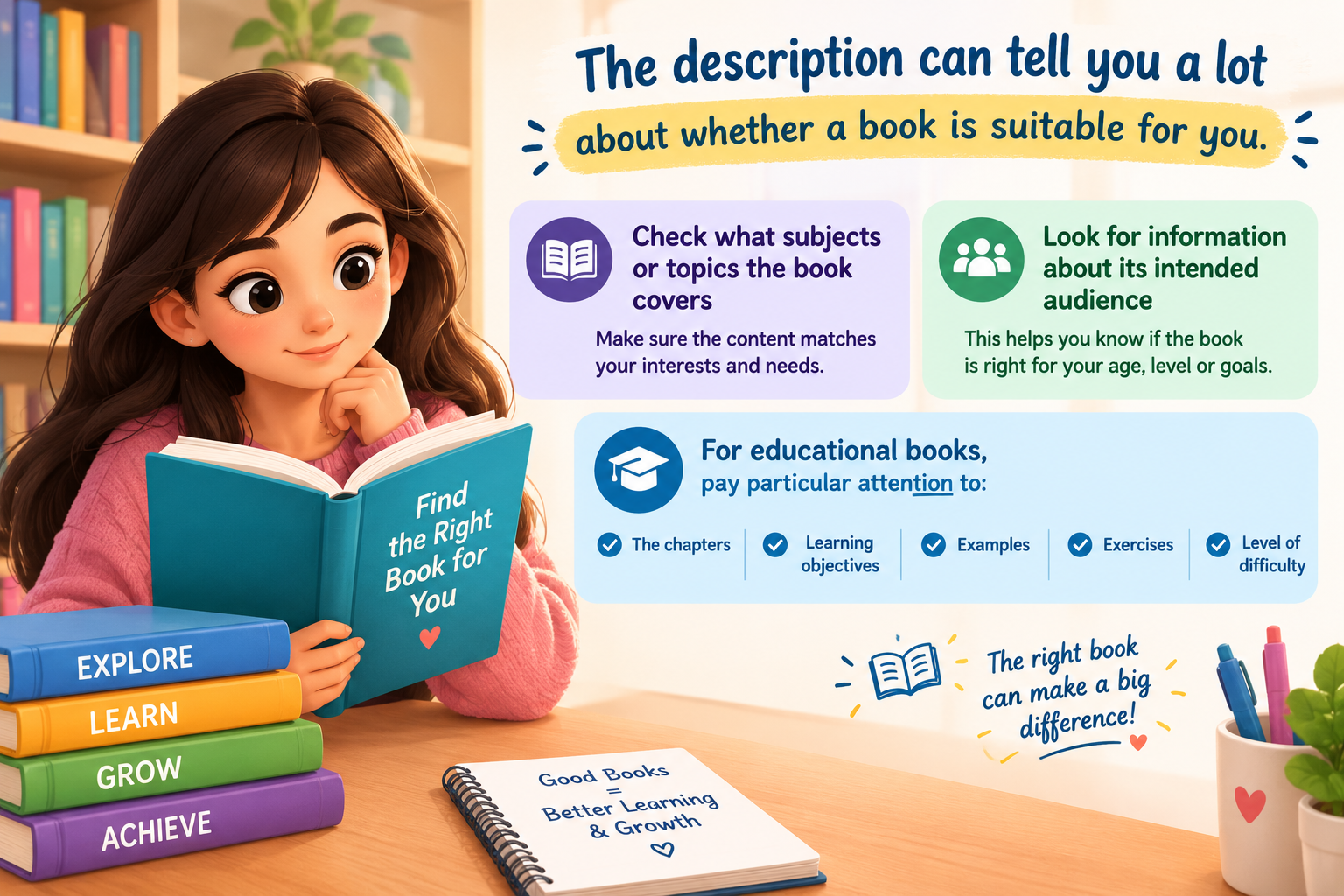
4. 📑 Read the Book Description
The description can tell you a lot about whether a book is suitable for you.
Check what subjects or topics the book covers and look for information about its intended audience.
For educational books, pay particular attention to the chapters, learning objectives, examples, exercises, and level of difficulty.
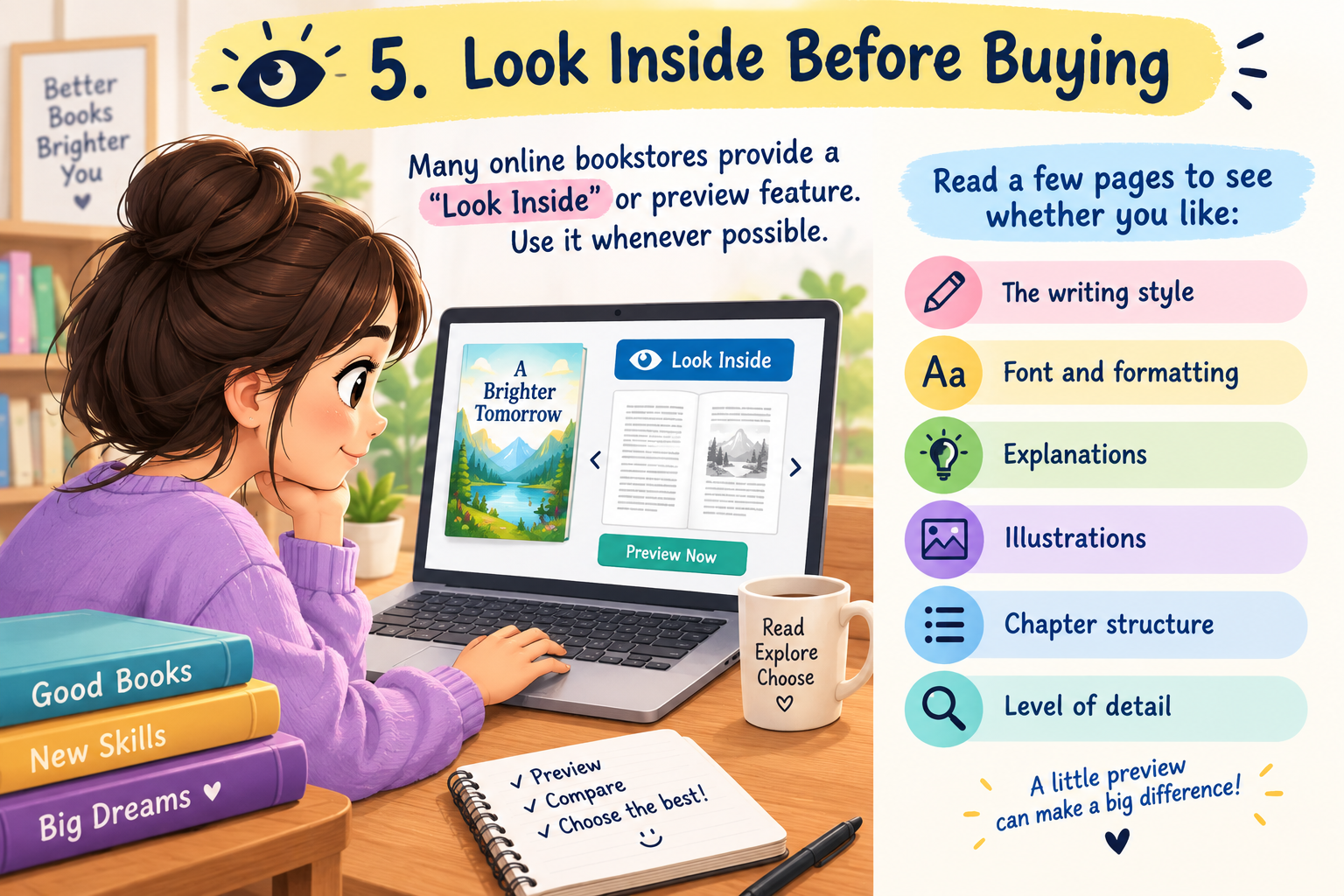
5. 👀 Look Inside Before Buying
Many online bookstores provide a “Look Inside” or preview feature.
Use it whenever possible.
Read a few pages to see whether you like:
- The writing style
- Font and formatting
- Explanations
- Illustrations
- Chapter structure
- Level of detail
A preview can help you avoid buying a book that doesn’t match your expectations.
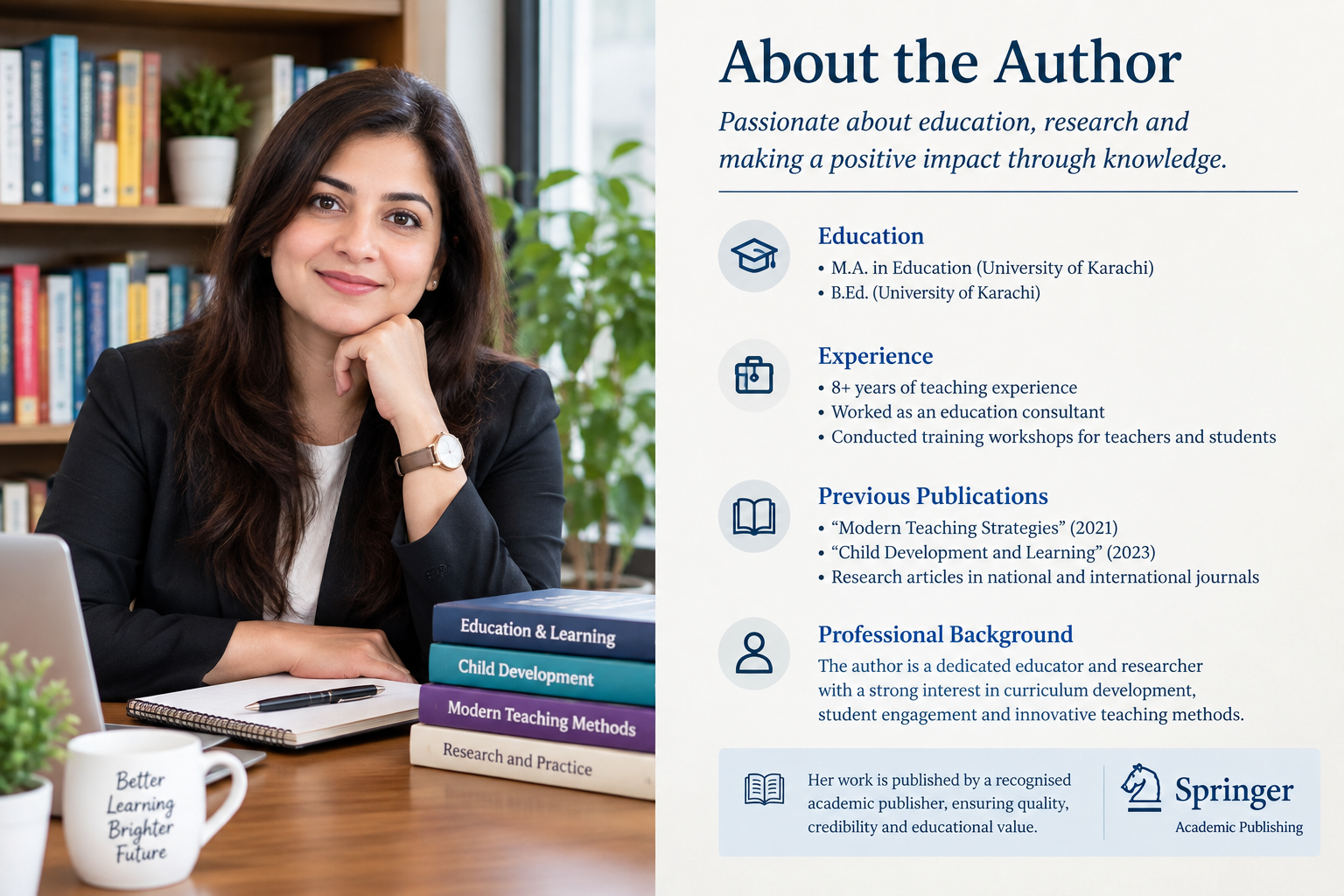
6. 📚 Check the Author
The author’s background can be useful, especially for educational and professional books.
Look at their qualifications, experience, previous publications, or professional background when relevant to the subject.
For academic subjects, you may also want to check whether the book is published by a recognised academic or educational publisher.
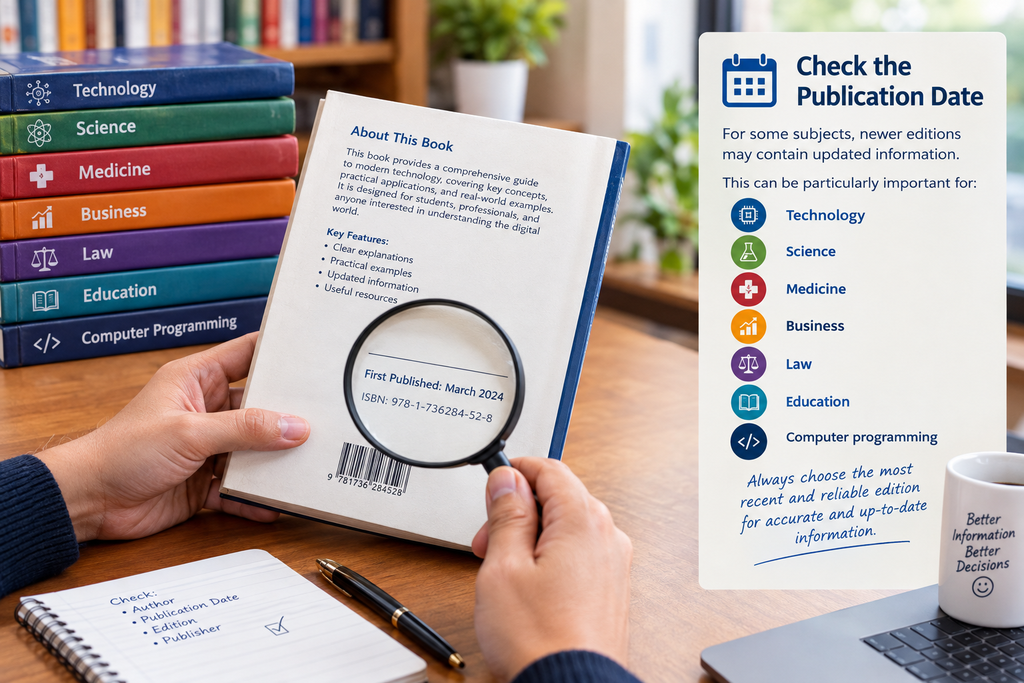
7. 🗓️ Check the Publication Date
For some subjects, newer editions may contain updated information.
This can be particularly important for:
- Technology
- Science
- Medicine
- Business
- Law
- Education
- Computer programming
For classic literature or historical works, an older edition may still be perfectly suitable.
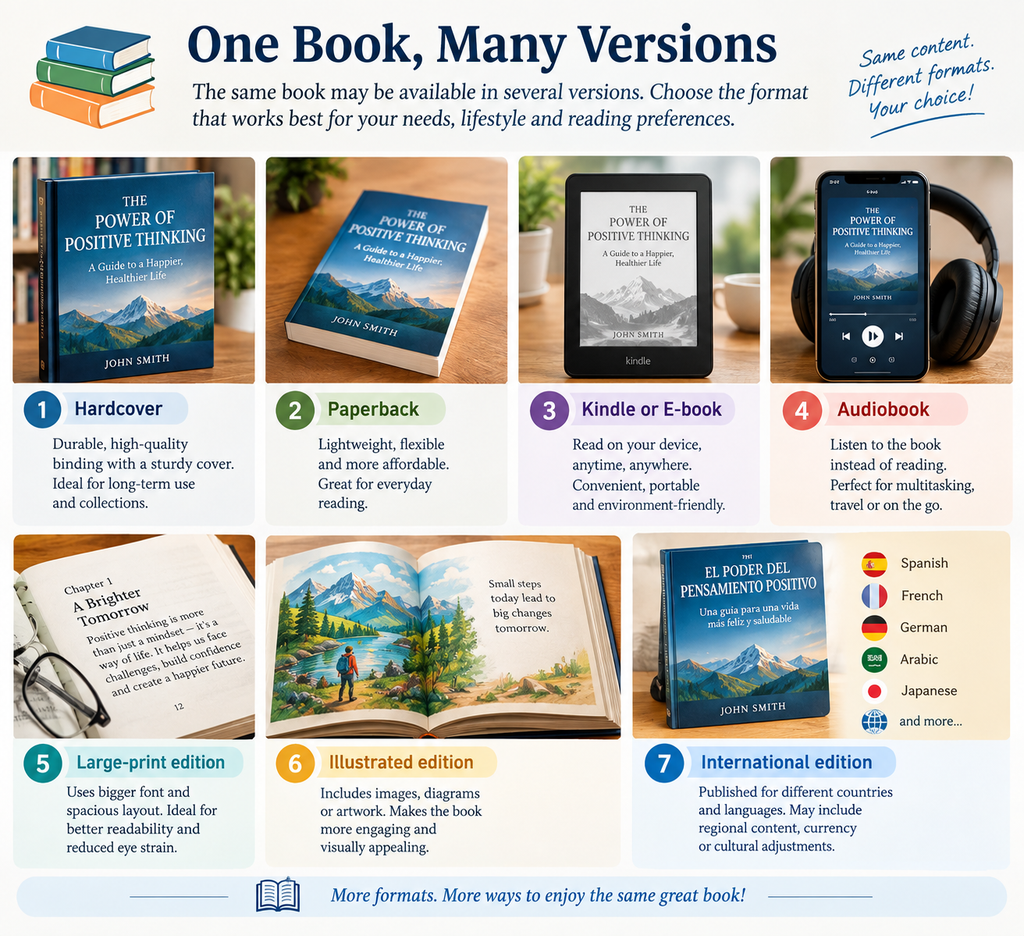
8. 📕 Choose the Right Edition and Format
The same book may be available in several versions:
- Hardcover
- Paperback
- Kindle or e-book
- Audiobook
- Large-print edition
- Illustrated edition
- International edition
Check the ISBN, edition number, publisher, and format before ordering, especially when purchasing textbooks.
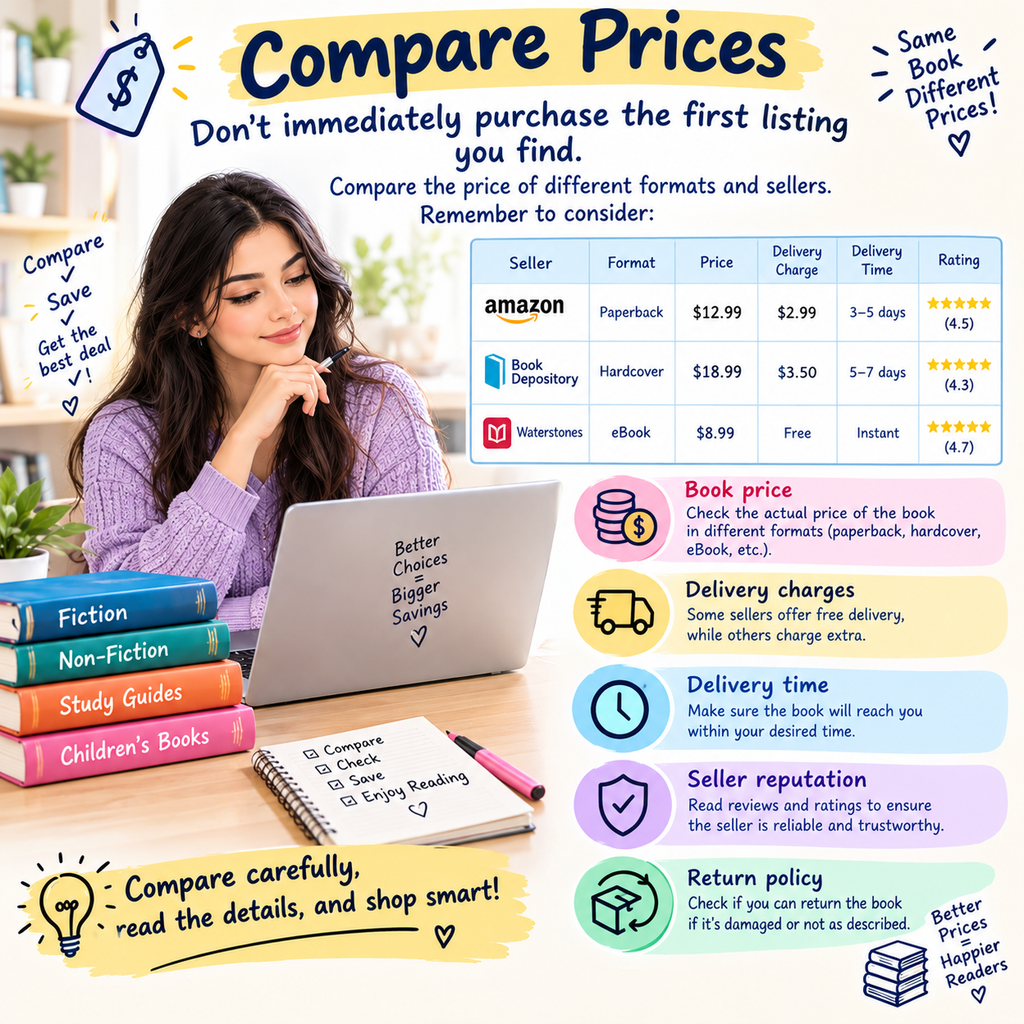
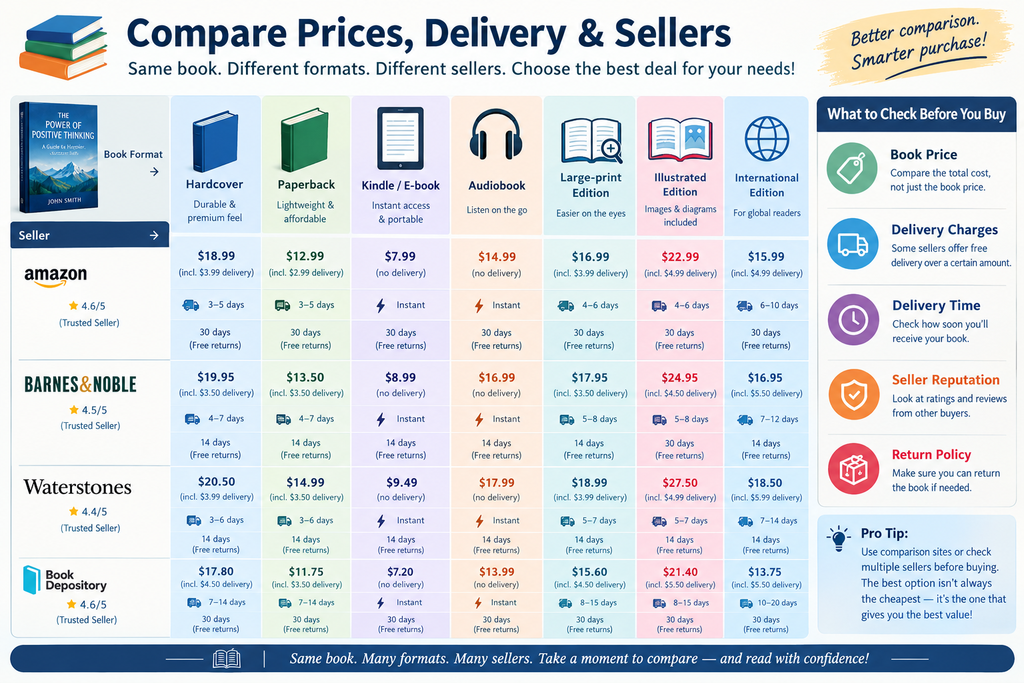
9. 💰 Compare Prices
Don’t immediately purchase the first listing you find.
Compare the price of different formats and sellers. Remember to consider:
- Book price
- Delivery charges
- Delivery time
- Seller reputation
- Return policy
Sometimes a slightly more expensive option may offer faster delivery or a more suitable edition.
10. 📏 Check the Book’s Difficulty Level
A book can be highly recommended but still not be appropriate for your current level.
Look for terms such as:
Beginner → Intermediate → Advanced
For textbooks and educational materials, check whether the book is designed for your particular course, age group, qualification, or level of study.
11. 📝 Check the Table of Contents
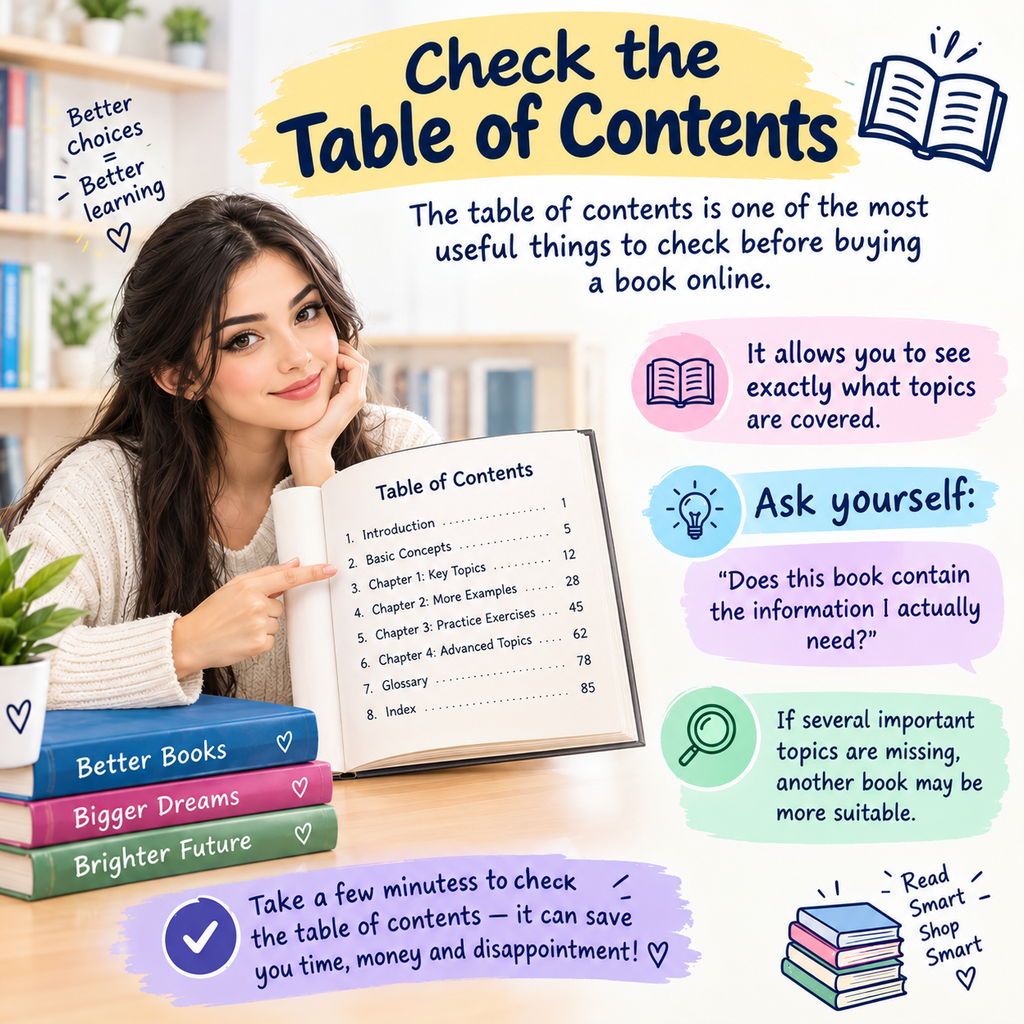
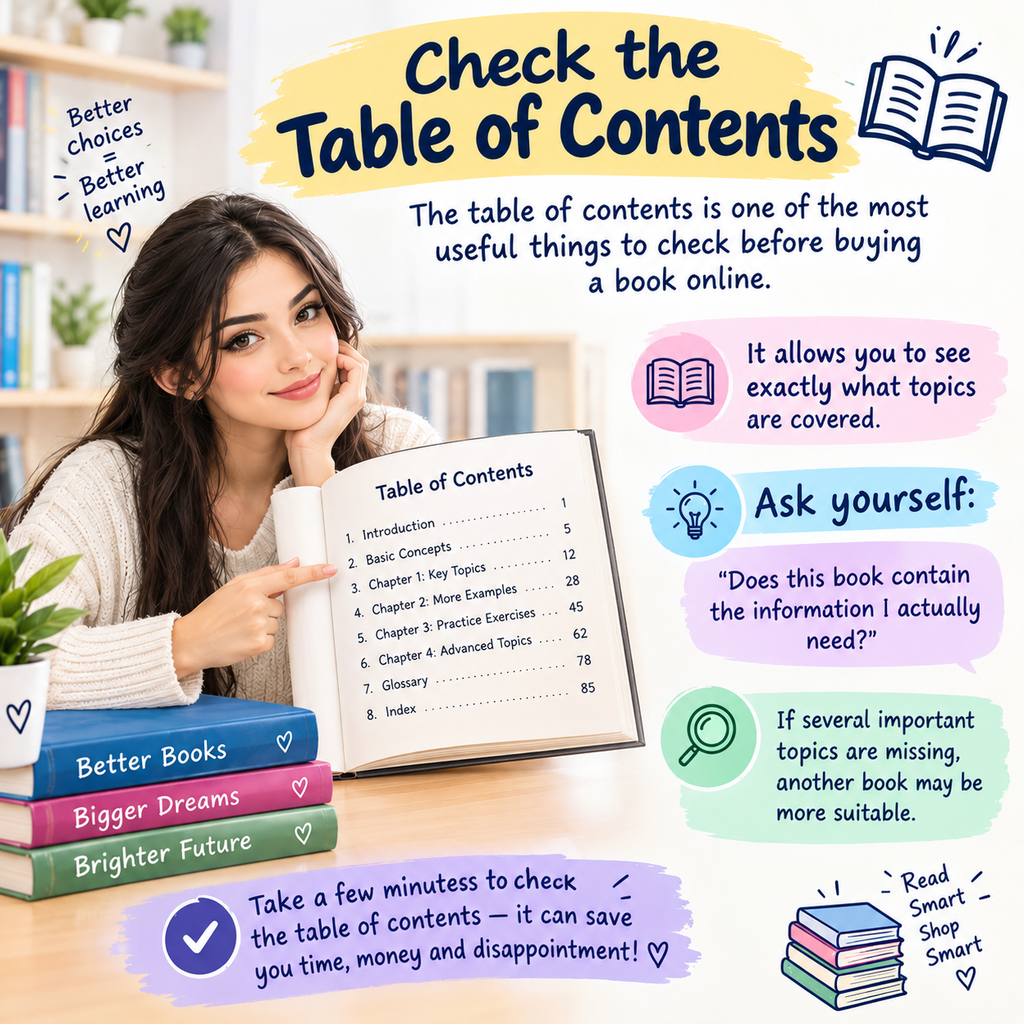
The table of contents is one of the most useful things to check before buying a book online.
It allows you to see exactly what topics are covered.
Ask yourself:
“Does this book contain the information I actually need?”
If several important topics are missing, another book may be more suitable.
12. 🔐 Buy From a Trusted Website
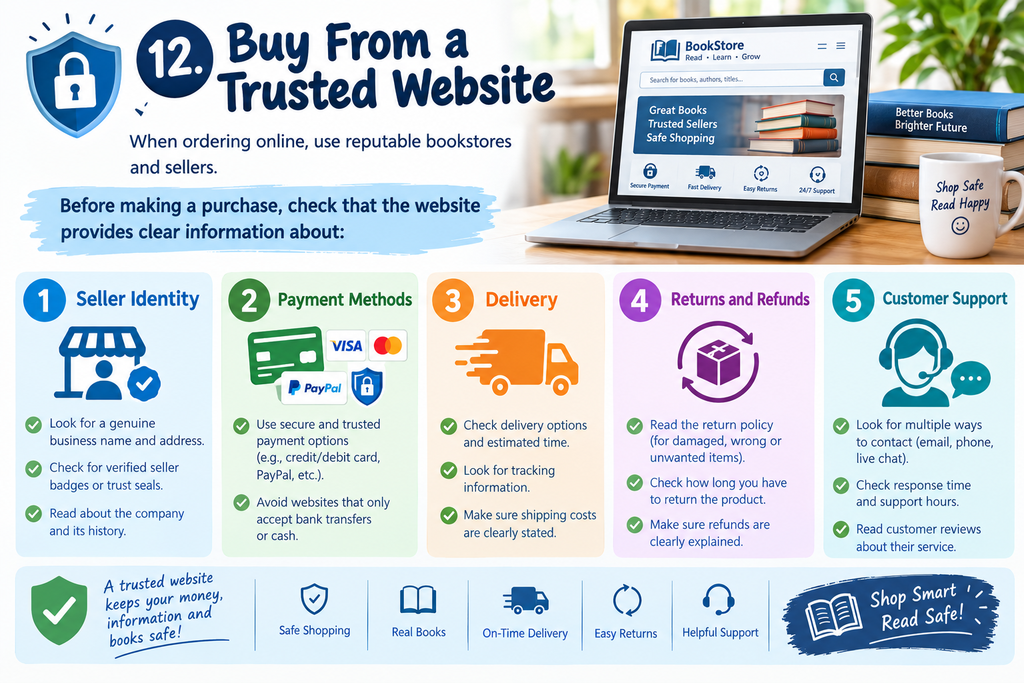
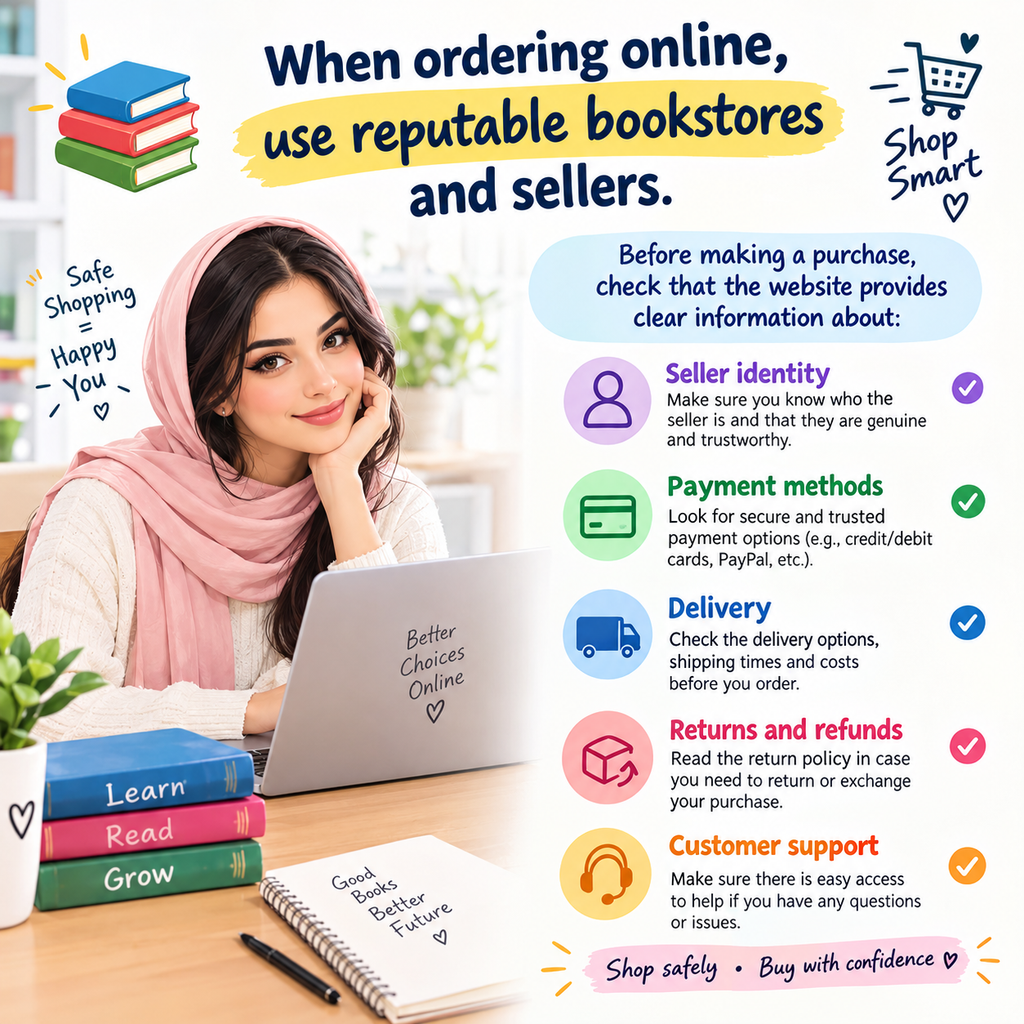
When ordering online, use reputable bookstores and sellers.
Before making a purchase, check that the website provides clear information about:
- Seller identity
- Payment methods
- Delivery
- Returns and refunds
- Customer support
Be cautious of websites offering unusually low prices or asking for unnecessary personal information.
13. 📦 Check Delivery and Return Policies
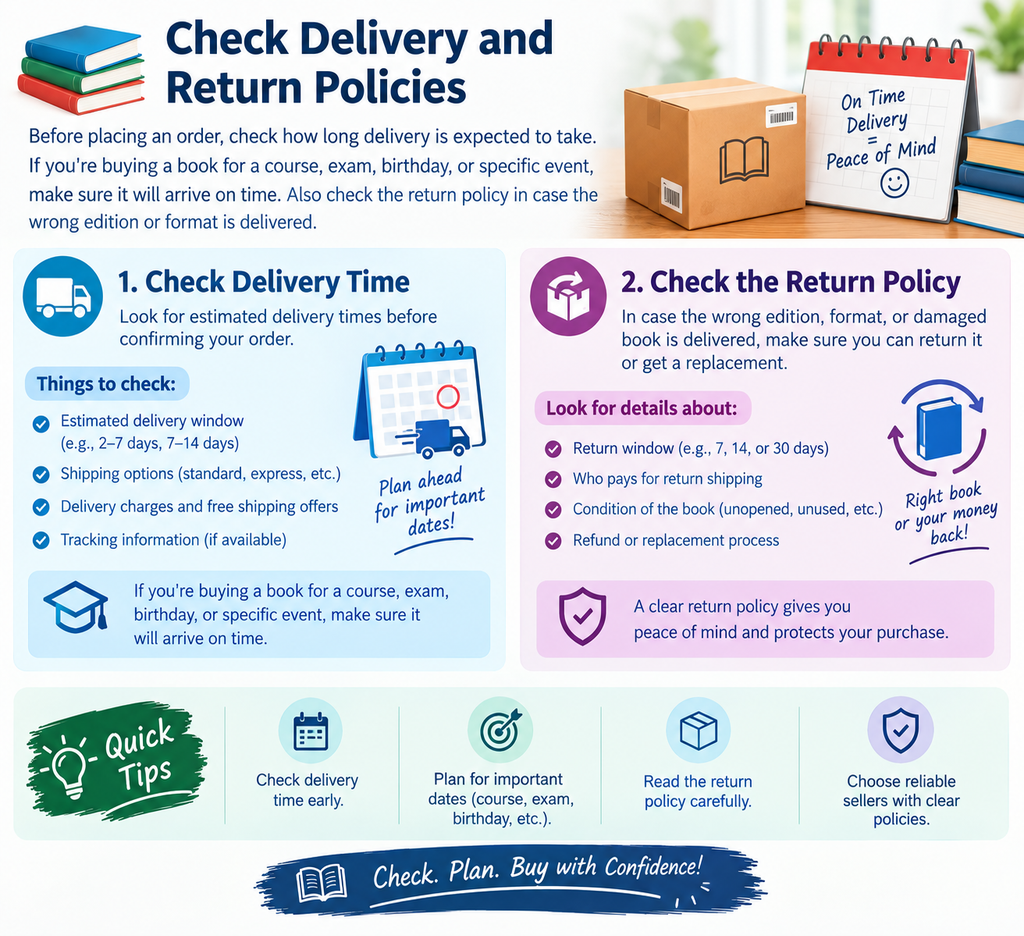
Before placing an order, check how long delivery is expected to take.
If you’re buying a book for a course, exam, birthday, or specific event, make sure it will arrive on time.
Also check the return policy in case the wrong edition or format is delivered.
14. 📱 Use Online Recommendations Carefully
Online recommendations can help you discover new books, but don’t choose a book simply because it is popular.
Consider whether it actually matches your interests, goals, reading level, and needs.
A popular book isn’t automatically the right book for every reader.
📚 Final Checklist Before Buying
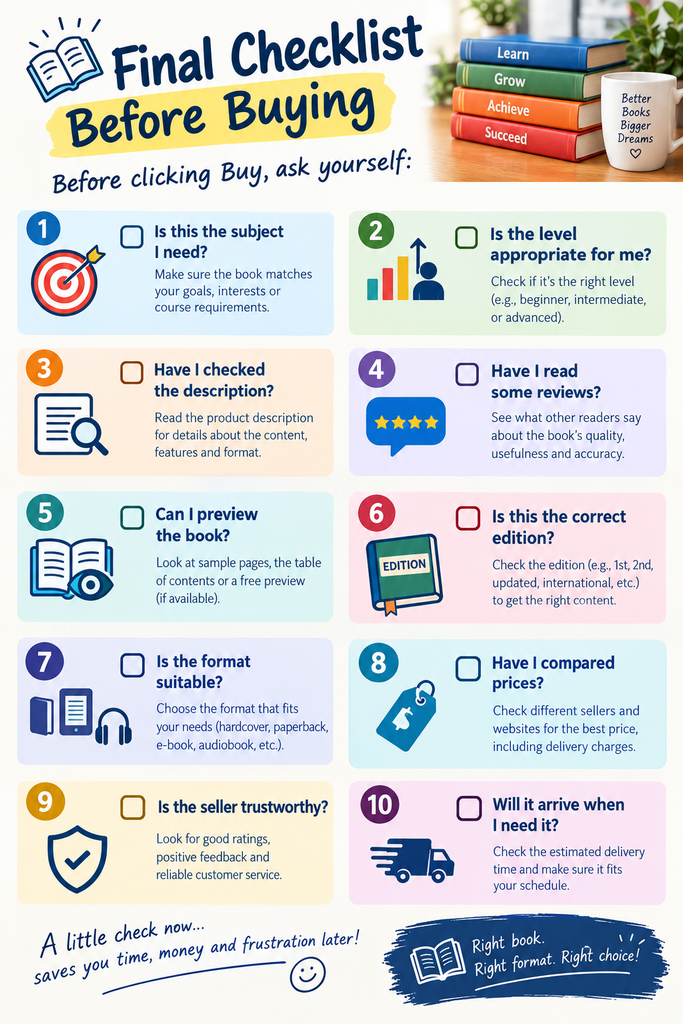
Before clicking Buy, ask yourself:
✅ Is this the subject I need?
✅ Is the level appropriate for me?
✅ Have I checked the description?
✅ Have I read some reviews?
✅ Can I preview the book?
✅ Is this the correct edition?
✅ Is the format suitable?
✅ Have I compared prices?
✅ Is the seller trustworthy?
✅ Will it arrive when I need it?
🌟 Final Thoughts
Choosing a book online doesn’t have to be difficult. The key is to know what you need, search carefully, compare your options, and check the details before buying.
Take a few minutes to read the description, explore the preview, check reviews, compare editions, and consider the author’s background. These simple steps can help you find a book that is genuinely useful and enjoyable.
Whether you’re buying your next novel, a textbook for your studies, or a guide to learn a new skill, thoughtful online research can make the entire process easier.
The right book isn’t necessarily the most popular one—it’s the one that matches your purpose, interests, and learning needs. 📚✨